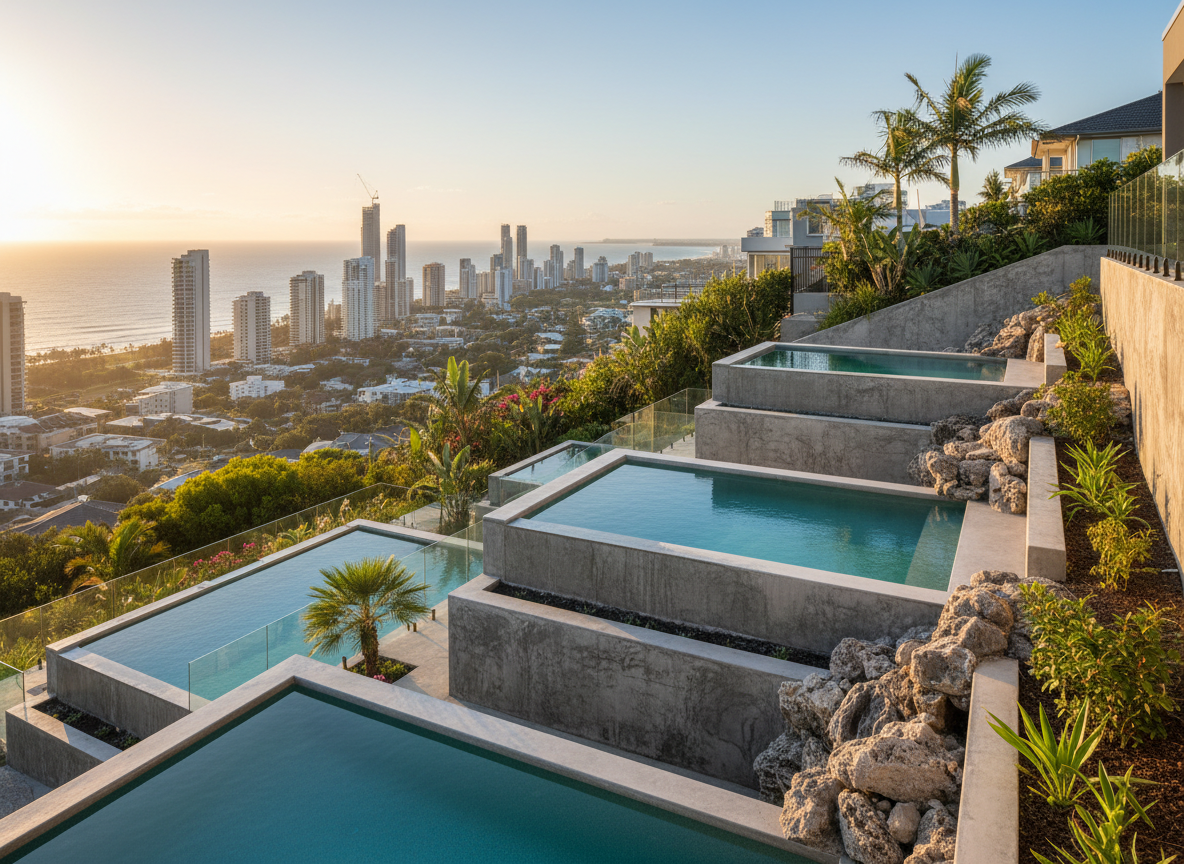
Yes, sloping blocks can take a pool: what to understand first
Most sloping blocks on the Gold Coast can take a concrete pool. Hillside sites in Tallai, Reedy Creek and Mudgeeraba need more planning: how far the ground falls, what sits under the topsoil, and how the high and low sides will be held in place.
Why concrete is the usual decision on a slope
Concrete is formed on site, so the shell can be stepped, raised out of the ground on the low side or set back into the hill. A fibreglass shell arrives as a fixed shape and needs a level, well supported bed, which can mean more cutting and filling on steep ground.
Rock, soil and retaining on hinterland ground
Hinterland blocks can hide rock just below the surface, while clay or old fill behaves differently again. Soil testing before design tells the engineer what the walls will sit on. On a fall, the pool often works together with retaining walls, and excavated material has to leave the site somehow.
Infinity edges and raised sides on a falling block
A slope can work in your favour. The low side can become a raised wall or an infinity edge looking out over the valley, provided the engineering covers the extra load. These features add structure, so ask for them to be priced as their own line.
Keeping slope costs in view with the right questions
A sloping site does not automatically make a pool unaffordable, but it shifts money into excavation, retaining and engineering. Ask each builder how rock is priced if it turns up, whether soil testing is included, and which retaining walls sit inside the contract rather than being left as extras.
Licensed pool builders, plans and approval on a hillside
Concrete pool work over $3,300 needs a builder holding the right QBCC licence class for pool construction, plus a written, signed contract. Building approval from a licensed certifier comes before any digging, and it relies on architectural plans and engineering specifications, which is where slope and retaining are formally designed.
Next step: note the fall and what is underfoot
Stand at the high side of the proposed pool area and estimate the drop to the low side, or count the steps down. Mark any exposed rock, existing retaining walls and the narrowest access point. Photos taken from the bottom of the slope looking up show the fall best.
Sloping Block Pools Services We Offer
✓Gentle Fall Blocks
A modest slope where the pool can be partly set into the ground, with a short raised wall or steps on the low side.
✓Steep Hillside Blocks
Sites with a big drop that usually need engineered retaining, careful spoil removal and a shell designed around the levels.
✓Infinity Edge Pools on a Slope
Using the fall so water spills over the low edge toward the view, with added structure covered in the engineering.
How it works
- 1
Look at the block
Note the fall across the pool area, the access width for machinery, drainage paths and any rock or retaining walls already visible.
- 2
Test the soil and engineer the design
Soil testing shows what the ground can carry, and the engineer designs the shell and retaining to suit your levels.
- 3
Approval and a written contract
A licensed certifier approves the pool and barrier before work starts, and the contract should spell out rock, retaining and spoil removal.
- 4
Excavate and build
Digging, any rock removal and retaining come first, then the concrete shell is formed, finished and the barrier certified before filling.